
Spicy gochujang noodles
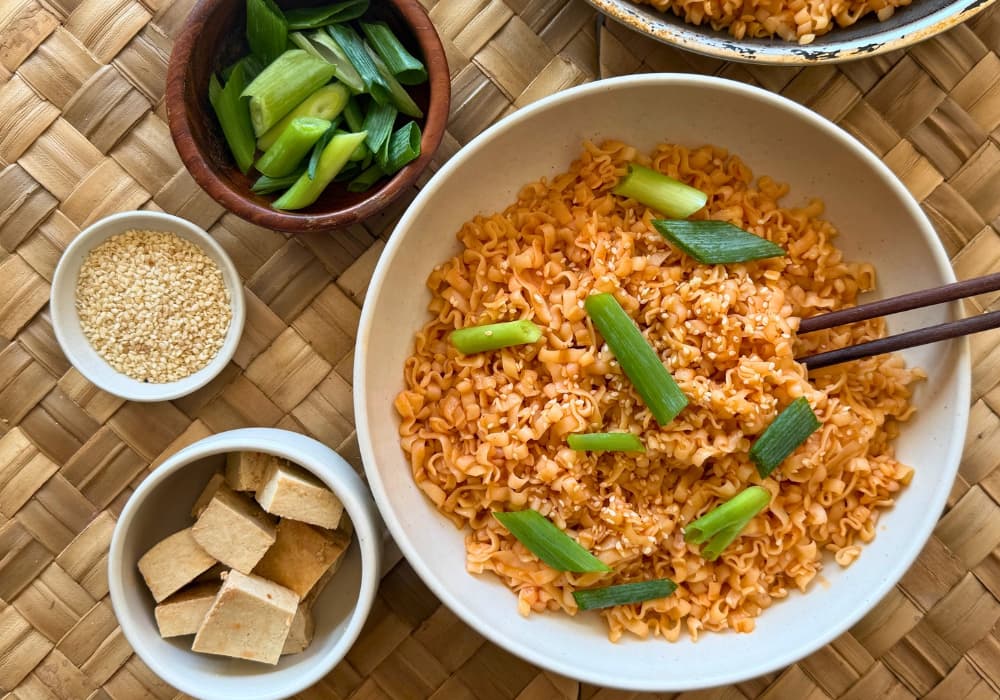
Spicy, tangy, and packed with savory-sweet flavor, these gochujang noodles are easy enough for a weeknight dinner. Enjoy them as-is with a few simple garnishes, or top them with your favorite protein and vegetables for a heartier meal.
The star of this dish is gochujang, a fermented Korean chili paste available at Asian and specialty markets, as well as many major grocery stores. Thick and sticky like tomato paste, it has a bold combination of spicy, sweet, salty, and savory flavors. Keep it in your pantry to add depth and umami to marinades, sauces, and stir-fries. These noodles come together in about 30 minutes, making them a great way to put it to use.
Preparation Time: 30 minutesIngredients
Calories:
450
Protein:
5
g
Gochujang sauce
- 0.25 cup gochujang chili paste, plus more to taste
- 3 tablespoons soy sauce or tamari
- 3 tablespoons rice vinegar
- 2 tablespoons toasted sesame oil
- 2 tablespoons maple syrup
Noodles
- 10 ounces rice noodles or wheat Asian-style noodles
- 1 tablespoon neutral oil
- 4 garlic cloves, minced
- 2 teaspoons grated fresh ginger
- 0.5 lime, juiced, plus more to taste
- 2 tablespoons sesame seeds
- 2 green onions, cut on the bias into 1-inch pieces
For serving (optional)
- your favorite protein, such as crispy tofu, tempeh, or shelled edamame
- sautéed vegetables, such as bell peppers, bok choy, or broccoli
Preparation
- Cook the noodles: Bring a large pot of water to a boil and cook the noodles according to the package directions until al dente, about 8 minutes. Drain well and rinse with cold water to prevent sticking. Set aside.
- Make the sauce: In a medium bowl, whisk together the gochujang, soy sauce, rice vinegar, sesame oil, and maple syrup until smooth. Taste and add more gochujang if you like it spicier.
- Cook the aromatics: Heat the oil in a large skillet over medium heat. Add the garlic and ginger and cook for 1 to 2 minutes, until fragrant.
- Toss the noodles: Add the noodles to the skillet and pour the sauce over the top. Cook for 1 to 2 minutes, tossing, until the noodles are warmed through and evenly coated.
- Finish and serve: Remove from the heat and squeeze the lime juice over the noodles. Taste and add more lime juice if needed. Sprinkle with sesame seeds and green onions, and serve with your favorite protein or vegetables, if desired.
Tips
- Adjust the heat: Gochujang varies in spice level by brand. Start with the amount listed and add more to taste, or use a little less for a milder sauce and adjust the sweetness with maple syrup.
- Rinse the noodles: Rinsing the cooked noodles under cold water removes excess starch and keeps them from clumping together.
- Add your favorite protein: Tofu, tempeh, shelled edamame, or vegan chicken all pair well. For a quick crispy tofu topping, sauté cubed extra-firm tofu in 1 tablespoon of oil until lightly golden, then add 2 tablespoons of soy sauce or tamari, 1 teaspoon of garlic powder, and black pepper, and cook until golden brown and crispy.
- Mix in vegetables: Bell peppers, shredded cabbage, baby bok choy, spinach, and broccoli all work well. Sauté firmer vegetables before adding the noodles, or stir in leafy greens at the end until just wilted.
- Swap the noodles: Ramen, soba, and udon all work, too. For a lighter option, use spiralized zucchini noodles. Skip boiling them and cook them in the skillet just until tender.
- No gochujang? Combine chili garlic sauce with a little miso paste and maple syrup for a similar balance of heat, sweetness, and umami. The flavor won’t be exactly the same, but it works in a pinch.
- Easy swaps: Use agave, brown rice syrup, or brown sugar instead of maple syrup, white wine or apple cider vinegar instead of rice vinegar, and chives instead of green onions. Chopped peanuts, cashews, or seaweed flakes can replace the sesame seeds.
- Make the sauce ahead: Whisk the sauce together up to 5 days ahead and store it in an airtight container in the refrigerator. Stir before using.
- Storage: Refrigerate leftovers in an airtight container for up to 3 days. The noodles will absorb some of the sauce as they sit.
- Reheating: Reheat in a skillet over medium-low heat with a splash of water to loosen the sauce, or microwave individual portions, stirring halfway through.
Try Plant-based Today
Sign up to get great tips and recipes