What is a plant-based diet? A beginner’s guide
So, you’re considering a plant-based diet. You’ve done a little research, talked to a few friends, and maybe even considered trying a plant-based dish at your favorite restaurant.
But what does eating plant-based actually mean? Does it make you vegetarian or vegan? Do you have to give up your favorite foods, nights out with friends, or family holiday traditions?
With so many diets, labels, and lifestyle trends out there, it’s easy to feel a little confused about where plant-based eating fits in. The good news? It’s simpler than you think.
Whether you’re looking to improve your health, make more compassionate choices for animals, reduce your environmental impact, or simply try something new, we’re here to help you understand what plant-based eating is, why people choose it, and how easy it can be to get started.
What is a plant-based diet?
At its core, a plant-based diet centers on delicious foods derived from plants—think fresh fruits, vibrant vegetables, nourishing grains, hearty legumes, and a variety of nuts and seeds.1
And the good news? Embracing plant-based eating doesn’t mean you have to change everything overnight. Whether you’re simply looking to eat more plants or feel inspired to transition away from animal products altogether, you can take things at your own pace.
For example, you might swap beef for lentils in a hearty shepherd’s pie, start your morning with oatmeal and fresh berries, or build a delicious dinner around colorful vegetables, hearty grains, and plant-based proteins.

Whatever path you choose, you don’t have to take an all-or-nothing approach. It’s about discovering new foods, exploring delicious alternatives, and finding simple ways to add more plants to your plate.
Plant-Based vs. vegan vs. vegetarian
The terms plant-based, vegan, and vegetarian are often used interchangeably, which can make exploring a plant-based diet feel much more intimidating than it needs to be. But while these eating patterns share similarities, there are a few important differences.
Veganism extends beyond what’s on your plate. In addition to avoiding meat, dairy, eggs, and other animal products, vegans generally avoid materials like leather and wool, as well as cosmetics tested on animals. While motivations vary, concern for animal welfare is central to veganism.
Vegetarianism excludes meat, poultry, and fish, but may include dairy products and eggs, depending on individual preferences.
The biggest takeaway? You don’t have to identify as vegan or vegetarian to enjoy the benefits of eating more plant-based foods.
Why choose a plant-based diet?
There are plenty of reasons why someone might choose to try a plant-based diet. But to keep things simple, we’re going to focus on three of the most common. After all, everyone’s motivations are different, and there’s no right or wrong reason to try something new!
How plant-based eating supports your health
It’s no surprise that improving overall health is one of the biggest reasons people turn to plant-based eating.
After all, plant foods like fruits, vegetables, whole grains, and legumes are packed with beneficial nutrients, including fiber, vitamins, minerals, and antioxidants. The soluble fiber found in plant foods can help lower cholesterol and manage blood sugar levels,2 while colorful fruits and vegetables provide essential vitamins and antioxidant compounds that help protect cells from damage.3
And yes, even protein can be found in a wide variety of plant foods!
In fact, research on the health benefits of plant-based eating suggests that eating more nutritious plant-based foods may help lower the risk of chronic conditions such as heart disease, stroke, high blood pressure, and type 2 diabetes.4
Eating plant-based for a greener planet
Did you know that the food on your plate can have a significant impact on the environment? According to research on the environmental impacts of food production from Our World in Data, producing one pound of beef generates approximately 60 times more greenhouse gas emissions than producing the same amount of peas.5
If the environment is your number one motivator, that statistic alone might just be enough to inspire you to incorporate more greens into your diet!
Even something as simple as introducing a “Meatless Monday” into your weekly routine can help reduce your environmental footprint. By choosing more plant-based meals, you can help lower greenhouse gas emissions while reducing the demand for land and water used in food production.
Showing compassion for animals
For many people, animal welfare is another reason to explore plant-based eating. When there is a genuine concern for the lives involved, eating plant-based takes on a whole new meaning.
After all, the animals raised for food are living, feeling beings. Unfortunately, on factory farms, animals are often kept in confined spaces that limit their ability to move freely or engage in natural behaviors. Chickens, pigs, and cows may spend much of their lives in conditions that prevent them from expressing some of their most basic instincts, such as foraging, exploring, and socializing.
Putting animals’ lives at the forefront can be a powerful motivation for turning compassion into action. By choosing more plant-based meals, you can help reduce the demand for animal products and contribute to a more compassionate food system.

What can you eat on a plant-based diet?
Now that you have an understanding of what plant-based eating is and why people choose it, let’s get into the good stuff — the food! Because plant-based eating isn’t just about salads and vegetables. There’s an abundance of ingredients to create flavorful, nourishing, and satisfying meals.
Fruits and vegetables
It’s probably no surprise that fruits and vegetables are a big part of a plant-based diet, but the possibilities go beyond just a basic green salad.
With a variety of leafy greens, colorful berries, hearty sweet potatoes, and crunchy vegetables, there’s plenty of room to experiment. And most of the time, it’s not so much about what you cook, but how you cook it.
For example, when you think of leafy greens, kale or spinach might be the first things that come to mind. But why not mix things up? Try simmering collard greens with vegetable broth, garlic, and various spices or sautéing rainbow chard with smoked paprika and lemon juice for a delicious twist on your usual favorites.
And here’s the best part: it doesn’t have to be difficult or expensive. You can add frozen berries to your smoothies, roast a pan of seasonal vegetables to toss with some pasta, or create a new soup using frozen veggies and canned beans.
Whole grains and starches
This might be one of the most popular sections because who doesn’t love a good pasta dish with a side of freshly baked bread? And the best part? Whole grains and starchy foods are excellent sources of energy, with many also providing fiber, vitamins, and essential minerals.
From warm oatmeal topped with bananas and maple syrup for breakfast to quinoa bowls packed with roasted sweet potatoes and colorful vegetables for lunch, there’s no shortage of ways to enjoy these satisfying staples.
Beans, legumes, and plant proteins
By now, you might be wondering: Where will I get my protein? And that’s a fair question! The good news? A wide variety of plant-based foods can contribute to meeting your daily protein needs!
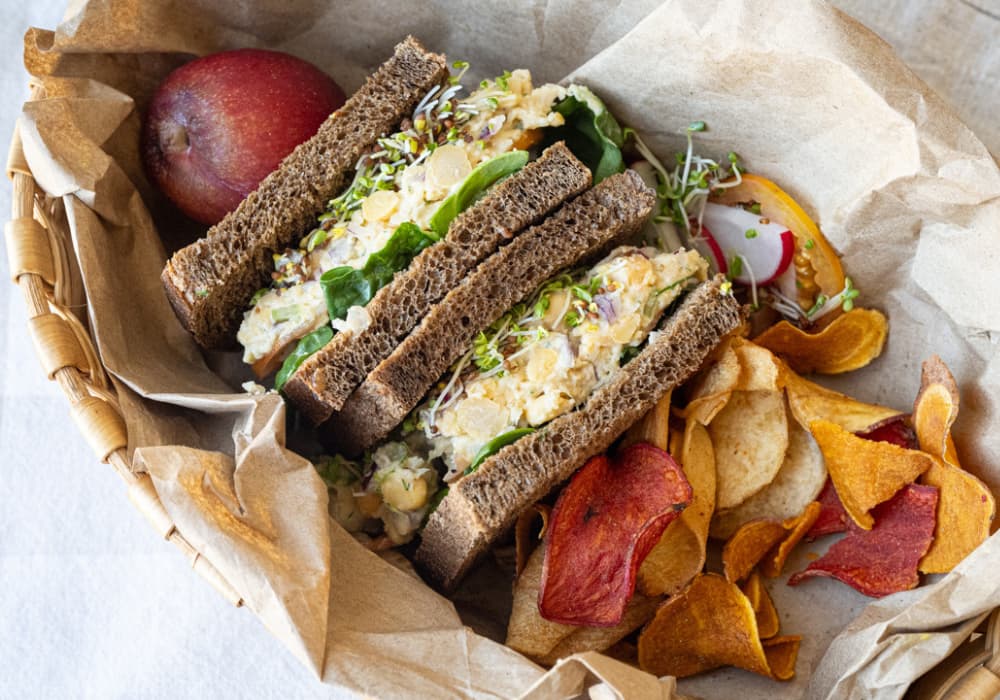
Black beans, pinto beans, kidney beans, and chickpeas are not only versatile for cooking, but most beans also offer about 15 grams of protein per cooked cup.6 Try our chickpea salad sandwich nutrient-dense lunch or dinner.
Another great and often overlooked source of protein is lentils. They’re small but mighty, packing a whopping 18 grams of protein per cooked cup.7 They’re also rich in fiber, folate, and beneficial plant compounds. Throw them in a stew or curry dish!
And let’s not forget some of the most common protein sources like tofu, tempeh, and edamame. Made from curdled soy milk, tofu is incredibly versatile and absorbs the flavors of the seasonings and sauces it’s cooked with.
Tempeh is made from fermented soybeans and is popular for its firmer texture. And edamame makes a delicious addition to salads, grain bowls, or even as a snack.
Nuts, seeds, and healthy fats
Let’s be honest, sometimes it’s the little extras that make a meal truly memorable. Nuts, seeds, and healthy fats might seem like small additions to your meal, but they bring a delightful blend of flavor, texture, and nutritional benefits to the table.
Some of our favorite heavy hitters are almonds, walnuts, chia seeds, pumpkin seeds, nut butters, avocados, and olive oil, to name a few. They all provide heart-healthy fats that help support cardiovascular health and the absorption of certain essential vitamins.
Try adding some chia seeds to your oatmeal or morning smoothie. Enjoy almond butter or a few slices of avocado on toast. And sprinkle some nuts over your favorite salad for a little extra crunch!
Easy everyday plant-based swaps
Feeling unsure about where to start on your plant-based journey? Don’t worry! We know change can be hard, but with just a few easy, attainable adjustments to your everyday meals, you might be surprised by how simple it can be.
Milk: Oat, almond, or soy milk for your coffee, cereal, and smoothies. There are multiple plant-based dairy alternatives, so try a few varieties to discover your favorite!
Meat: Lentils, mushrooms, and beans are great for burgers, tacos, and even meatballs, like in our lentil meatball subs. Tofu and tempeh can be great substitutes for meat in pasta dishes and stir-fries.

Cheese: Plant-based cheese on a breakfast sandwich, nutritional yeast sprinkled on popcorn, or a creamy cashew sauce in mac and cheese.
Eggs: Seasoning a breakfast tofu scramble with black salt gives it that unique egg-like flavor. And for your favorite dessert, flaxseed mixtures can be used as an egg substitute in some recipes.
Butter: Try olive oil or plant-based butter for some of your cooking and baking needs.
Don’t be afraid to experiment and find what works best for you!
Making plant-based eating work for you
Ready to put everything you’ve learned into action? Here are a few tips to make getting started even easier!
Easy ways to get started
Start with one meal: Set a goal to make your breakfast plant-based or to make one meatless dinner each week.
Build on foods you already enjoy: Get creative with your familiar favorites rather than learning entirely new recipes.
Keep versatile staples in your pantry: Use our plant-based grocery list to stock up on your basics like beans, lentils, rice, pasta, oats, and frozen vegetables.
Experiment with flavors and textures: Introduce different seasonings, sauces, herbs, and cooking techniques to make your meals fun and exciting.
What does a day of plant-based eating look like?
Not sure where to start? Here’s a simple, enjoyable day of plant-based meals to get you going.
Breakfast: A breakfast burrito filled with savory tofu scramble.
Lunch: A crispy tofu BLT or Coconut lentil soup.

Dinner: A BBQ black bean cheeseburger or crispy tofu street tacos.
Snack: Apple slices with almond butter or hummus with fresh vegetables.
From savory breakfasts to comforting dinners, plant-based eating offers plenty of opportunities to explore new flavors while enjoying familiar favorites.
Frequently asked questions about plant-based eating
Is plant-based eating expensive?
A common misconception is that eating plant-based is expensive. And while certain specialty products can be pricey, many plant-based staples are affordable. Things like dried or canned beans, lentils, rice, oats, and seasonal or frozen produce are usually budget-friendly.
Can I eat plant-based food when dining out?
Fortunately, plant-based options are becoming more popular, making dinner out easier than ever. Look for menu items like vegetable stir-fries, bean burritos, grain bowls, and pastas. Check menus beforehand and don’t be afraid to ask the staff about possible substitutions!
Can I eat plant-based if my family doesn’t?
Not everyone in your household has to eat the same way, and simple meals with easy swaps can work for everyone. Try adaptable meals like grain bowls and pastas with different toppings or protein choices.
Is plant-based eating time-consuming?
Plant-based eating can be as simple as you’d like it to be! Meal prepping, batch-cooking grains, using canned beans, and keeping frozen vegetables available are easy ways to keep meals quick and convenient.
The best part about exploring plant-based eating? There’s no single right way to begin! It can open up an entirely new way of experiencing some of the food you already know and love!
We invite you to explore some of our plant-based recipes for beginners to help get you started on your plant-based journey, and reach out to us with any questions you may have along the way.
So grab your apron, get creative, and let the plant-based adventures begin!
- McManus, K. D. (2024, March 28). “What is a plant-based diet and why should you try it?” Harvard Health Publishing. https://www.health.harvard.edu/blog/what-is-a-plant-based-diet-and-why-should-you-try-it-201809261700
- Harvard T.H. Chan School of Public Health. (n.d.). “Fiber.” The Nutrition Source. https://nutritionsource.hsph.harvard.edu/carbohydrates/fiber/
- Harvard T.H. Chan School of Public Health. (n.d.). “What Are Antioxidants?” The Nutrition Source. https://nutritionsource.hsph.harvard.edu/antioxidants/
- American Heart Association. (2023, December 20). “How Does Plant-Forward (Plant-Based) Eating Benefit Your Health?” American Heart Association. https://www.heart.org/en/healthy-living/healthy-eating/eat-smart/nutrition-basics/how-does-plant-forward-eating-benefit-your-health
- Ritchie, H., Rosado, P., & Roser, M. (n.d.). “Environmental Impacts of Food Production.” Our World in Data. https://ourworldindata.org/environmental-impacts-of-food
- Petre, A., & Ajmera, R. (2026, July 16). “The Best Vegan and Vegetarian Sources of Protein.” Healthline. https://www.healthline.com/nutrition/protein-for-vegans-vegetarians
- Harvard T.H. Chan School of Public Health. (n.d.). “Prioritize hearty and savory plant-based preparations.” The Nutrition Source. https://nutritionsource.hsph.harvard.edu/elevate-your-plate/hearty-and-savory-plant-based/
Try Plant-based Today